Ijazah in Quran is a trusted system in the Muslim world. It protects the correct recitation of the Book. The concept is simple. A student learns from a qualified teacher who already holds an Ijazah. Then, once the student recites with perfect rules, the teacher approves them to teach or recite the Quran with authority. This chain connects back to the Prophet ﷺ. That is why Muslims treat Ijazah as an honor and a responsibility.
Quran Ijazah is a formal approval from a certified teacher that confirms a student can recite or teach the Quran with correct Tajweed. It proves accuracy, skill, and trust. Many students today earn their Ijazah through expert online programs such as Almuhammadi Academy, which connects them with skilled egyptian quan teachers who hold strong Ijazah chains.
What Is Ijazah In Quran?
Ijazah in Quran is a formal approval a student receives from a qualified teacher after showing perfect recitation or memorization. It is a trusted way to protect the correct recitation of the Quran. The teacher who gives the Ijazah must also hold an Ijazah from their own teacher. This creates a long chain that reaches back to the Prophet ﷺ.
Muslims see this as a strong way to keep the Quran pure. It also shows that the student has gained enough skill to recite or teach with confidence. Many students take this step when they want higher learning, stronger Tajweed, or a deeper link with the Quran—especially those enrolled in a hifz program who aim to achieve top-level precision and certification.
What Are the Main Types of Quran Ijazah?
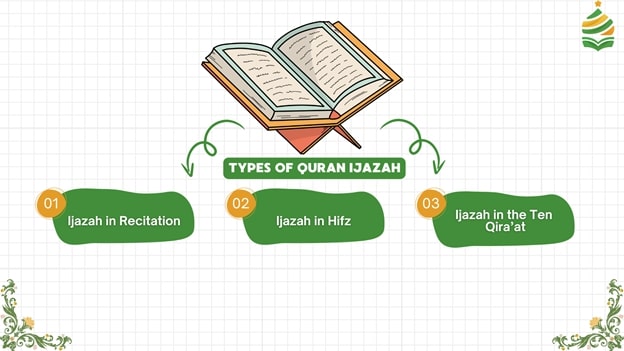
There are several types of Online Ijazah Courses. Each one focuses on a different level of skill. Students choose based on their goals. Some want to improve recitation. Others want to teach. Some want to master different qira’at. Each type comes with its own requirements and tests.
1. Ijazah in Recitation (Tilawah + Tajweed)
This is the most common form. Students train to recite the entire Quran with correct rules of Tajweed. They read to the teacher until all mistakes are corrected. The teacher listens carefully and helps the student polish tone, length, stops, and flow.
2. Ijazah in Hifz (Full Memorization)
This Ijazah is for students who have memorized the entire Quran. The student must recite every part from memory without looking at the Mushaf. The test is long and detailed. The teacher checks the student’s accuracy, memory strength, and consistency.
3. Ijazah in the Ten Qira’at
This is a more advanced type. It is for students who want to learn the different styles of recitation passed down from famous scholars in their quran recitation course. Each qira’ah has its own rules. The student must read and understand these differences with precision.
Why Do Muslims Need Quran Ijazah Today (Importance)?
Muslims need Ijazah today for clarity, correctness, and trust. Even though many people learn the Quran with the best intention, they still need guidance from certified teachers. This helps them avoid mistakes that can change the meaning. In addition, students who want to teach the Quran must earn this approval so others can trust their knowledge.
Here are simple reasons Ijazah is valuable now:
- It ensures correct recitation with strong Tajweed.
- It protects the chain of transmission from errors.
- It gives the student a recognized qualification.
- It builds discipline and improves focus.
- It helps students serve their communities as teachers or mentors.
With the rise of online learning, Ijazah has become easier for people who want structured and verified training.
How Does the Sanad (Chain of Transmission) Work in Ijazah?
Sanad is the chain that connects a student to their teacher, then to the teacher’s teacher, and then through many generations until it reaches the Prophet ﷺ. This chain is the foundation of Ijazah. It proves that the Quran was passed from one trusted person to the next without changes. It also builds a strong sense of responsibility. Each student becomes part of a living chain that carries the words of Allah with care and respect.
Teachers often share their sanad with the student after the final test. This shows the exact path through which they learned the Quran. Students feel honored when they join this chain because it gives them a spiritual bond with those who carried the Quran before them.
What Makes a Sanad Strong or Weak?
A sanad becomes strong when:
- Each teacher in the chain was known for accurate recitation.
- The chain is short, meaning fewer people between the student and the Prophet ﷺ.
- Every link is verified through written or oral records.
A sanad becomes weak when:
- A teacher in the chain had unclear or doubtful skills.
- The chain is very long and difficult to verify.
- There is no record of the teacher’s own Ijazah.
Here is a simple comparison:
| Feature | Strong Sanad | Weak Sanad |
| Accuracy | Very high | Uncertain |
| Length | Shorter chain | Long chain |
| Teacher history | Well-known and trusted | Unknown or unclear |
| Verification | Easy to confirm | Hard to confirm |
What Skills Does a Student Need Before Starting Ijazah?
Students do not need perfection before entering an Ijazah program. However, they must have a solid foundation. This helps the teacher focus on polishing their skills instead of teaching everything from zero.
1. Tajweed Knowledge
Students must know basic Tajweed rules. They should understand:
- Makharij (where letters come from).
- Sifaat (qualities of letters).
- Madd (lengthening rules).
- Rules of Noon Saakin and Meem Saakin.
- Stopping and starting rules.
2. Fluency and Consistency Requirements
Students must recite without long pauses. They should read Ayahs smoothly, with steady pacing. Even if small mistakes happen, the recitation should be continuous.
Consistency also matters. Students must be able to:
- Attend sessions regularly.
- Practice daily without long breaks.
- Maintain the same level of recitation throughout the course.
How Do You Earn Quran Ijazah Step-by-Step?
The process is structured and simple. Each step builds the student’s accuracy.
- Initial Evaluation
The teacher listens to a sample recitation. This helps them understand the student’s level. They check Tajweed, fluency, and confidence. - Full Mushaf Reading (Mushafah)
This is the main part. The student recites the entire Quran from start to end. The teacher corrects mistakes and guides the student in tone, stops, and rules. Students read a small portion each session until they complete the full Mushaf. - Correction and Improvement Phase
The teacher notes repeated errors. Then the student practices these areas until the mistakes disappear. This phase sharpens the student’s precision. - Final Test (Imtihaan)
When the teacher sees consistency, they conduct a final exam. The student must recite selected parts or sometimes the entire Quran again. The test shows full accuracy.
How Long Does It Take to Get an Ijazah?
The duration depends on the student’s level and the type of Ijazah. There is no fixed timeline. Some students finish in a few months. Others take a year or more. Fluency, consistency, and daily practice speed up progress.
General timelines:
- Recitation Ijazah: 4 to 12 months
- Hifz Ijazah: 6 to 18 months
- Advanced Qira’at Ijazah: 1 to 3 years
The key is steady improvement. Teachers never rush the process because Ijazah requires complete accuracy. When the student maintains strong recitation without repeated errors, the teacher approves them with confidence.
Final Words
Quran Ijazah remains one of the most trusted paths for learning, perfecting, and passing on the words of Allah. It gives students skill, confidence, and a strong link to the authentic chain of recitation.
Anyone with discipline and sincere intention can begin this journey, grow through guided training, and reach a level of mastery that carries real responsibility and honor. If you feel ready to start your own Ijazah path with expert teachers, you can join AlMuhammadi Academy and learn with certified instructors who guide students step-by-step with care and precision. Whether you are enrolled in hifz classes for kids or hifz classes for adults, this structured approach helps every learner build strong skills and progress with confidence.